

GUM VENEERS
BEFORE AND AFTER
More
CLICK TO VIEW
A STORY BELOW
Success and celebrity is not what defines LLK; the doctor’s commitment to their patients and to each other is the true hallmark of the LLK philosophy. Doctors Marc Lowenberg, Gregg Lituchy and Brian Kantor are partners and best friends, and the key to this triumvirate’s success is their shared value system which places patient care above all else. They have done more than perfect the art of the smile; they have found a way to individualize the art of dental care and treatment so that each patient’s result reflects how they want to be seen, and ultimately how they see themselves.
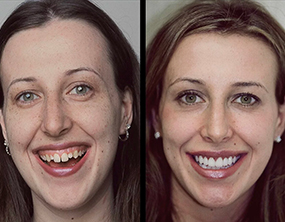
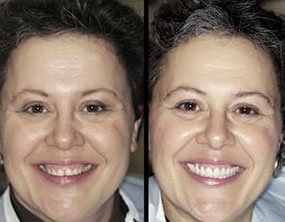
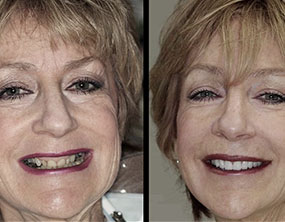
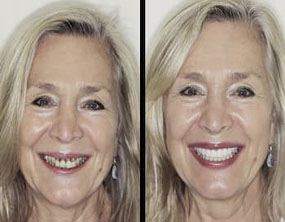
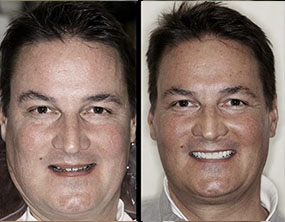
| People searching for “gum veneers before and after” usually want to improve a gummy smile, where the gums draw more attention than the teeth, making the teeth look short or uneven. At Lowenberg, Lituchy & Kantor, we achieve comparable smile transformations with a gum lift (gum contouring) and, when appropriate, porcelain veneers designed together from the start. Our in-house periodontist, cosmetic dentists, and laboratory team of eight technicians coordinate treatment to create a balanced gum line and natural-looking tooth proportions. When appropriate, the veneer phase can be completed in two treatment visits, with additional time or appointments for gum contouring and healing as needed. |
At LLK, our technicians handcraft feldspathic porcelain veneers with natural translucency and subtle surface variations. By tailoring each veneer to the reshaped gum line, we create tooth proportions that complement the patient’s natural smile, as shown in our before-and-after cases.
Brittany, one of our patients, came to us with a concern she had quietly carried for years. Whenever she laughed or smiled naturally, she felt people noticed her gums before her teeth. She had trained herself to smile more cautiously and wondered whether anything could change that without looking obviously “done.”
Her concern is a common reason patients seek treatment at Lowenberg, Lituchy & Kantor. When gum contouring is paired with porcelain veneers where appropriate, the teeth appear longer, the gum line becomes more symmetrical, and the smile remains unmistakably natural.
That philosophy of creating a “perfectly imperfect smile” guides every case. After her treatment, Brittany described the result simply: “Now when I smile it’s my beautiful teeth that might startle you, but that’s OK.” The before-and-after patient stories below show how Lowenberg, Lituchy & Kantor achieve those transformations.
If you’ve ever found yourself smiling less because of excess gum display or uneven proportions, you’re not alone, and there may be more than one way to achieve the smile you envision.
The sections below explain how LLK approaches gummy smile correction, when porcelain veneers fit into the treatment plan, and what real before-and-after transformations can realistically achieve.
Key Takeaways
- A gummy smile, meaning a disproportionate band of gum tissue showing when you smile fully, is correctable with a gum lift (gum contouring) combined with porcelain veneers, and both are handled under one roof at LLK.
- Our in-house laboratory team of eight technicians hand-layers feldspathic porcelain veneers to match the refined gum line, working directly with our cosmetic dentists and periodontist so the gum reshaping and tooth proportions are designed in harmony from the start.
- The “perfectly imperfect smile” approach delivers naturally balanced results rather than a sculpted look, because the veneers carry subtle, deliberate irregularities, and the porcelain lets light pass through like natural enamel.
- The porcelain veneer phase typically involves two treatment visits spaced about one to two weeks apart, with temporary veneers that let you evaluate shape, size, length, and color before the final restorations are made. Gum contouring may require additional healing time or appointments, depending on the treatment plan.
- Porcelain veneers typically last 15 to 20 years with proper care and resist staining. Unlike whitening, which temporarily changes tooth shade, veneers can also improve tooth shape, length, and proportions.
What Do the Gum Veneers Before-and-After Photos Show?
The gum veneer before-and-after photos show how gum contouring (gum lift) and, when appropriate, porcelain veneers change gum line height, visible tooth length, gum-to-tooth proportions, and the overall balance of the smile. At Lowenberg, Lituchy & Kantor, our three patient cases illustrate these changes and show how reshaping the gums and teeth together can create a more balanced smile.
But before you scroll, it helps to know what to look for, because gum cases are easy to misread. Four things are worth tracking in every pair of images:
- Where the gum line sits relative to the tooth: This is the direct change a gum lift makes. Compare how much pink shows above the two front teeth in the before shot against the after shot, rather than judging the smile as a whole.
- Tooth proportions, not just whiteness: Whitening changes your teeth’s shade, while a gum lift combined with veneers can improve their visible length and proportions. In gummy-smile correction, the goal is to create a more balanced gum line and make the teeth appear longer relative to the surrounding gums.
- Whether the proportions look consistent across the arch: A well-designed result keeps the relationship between the central teeth, the ones on either side, and the gum line even as it moves across the smile. A row of identical teeth signals the opposite.
- Whether the two photos are genuinely comparable: The American Society of Plastic Surgeons provides general guidelines for clinical before-and-after photography that emphasize consistent lighting, positioning, and visibility of the treated area. For smile photos, look for similar head angles, lighting, and facial expressions so you can assess the results without misleading differences between images.
If the before is a tight-lipped snapshot and the after is a full grin, you are comparing two photographs rather than two states of the same smile.
Keep this distinction in mind when viewing before-and-after photographs, including those in our patient gallery. The images document individual treatment results, while accompanying patient stories may be edited or use changed names to protect patient privacy.
The photographs show what treatment achieved for those patients, but individual results vary depending on factors such as anatomy, gum tissue, and healing.
Brittany: From a Gum-Dominated Smile to Balanced Proportions
Brittany’s before photos show the hallmark of a gummy smile. Excess gum tissue covers much of the visible tooth surface, so the teeth look short and overwhelmed, and the eye lands on pink tissue rather than on the tooth. In her own words, when she smiled big, it was all gum.
Her treatment plan combined a gum lift with upper porcelain veneers. Raising the gum line immediately exposed more tooth length and rebalanced the gum-to-tooth proportion. The veneers were then hand-crafted to harmonize with the newly sculpted gum line, so the teeth read longer and more prominent without looking oversized.
In the after photos, the gum line sits slightly higher, the teeth take up a much larger share of the smile, and the gum-to-tooth balance is restored. Brittany summed up the transformation best: now, when she smiles, people notice her teeth.
Mary: How a Gum Lift Reveals Spaces That Porcelain Veneers Can Close
Mary’s case shows a nuance most readers do not expect. Her before photos show small-looking teeth with excess gum tissue, a classic gummy smile.
When we raised her gum line, something else became visible. As our doctors explain in her patient story, “Often when we raise the gum line, a procedure called a gum lift, spaces are created between the teeth, making it necessary to reshape the teeth with porcelain veneers.”
In Mary’s case, the veneers closed the newly exposed spaces and restored balanced tooth proportions, creating a naturally harmonious smile. The before-and-after contrast in the dental veneer photos is striking. As our doctors put it, instead of seeing an expanse of shiny pink gums, you see great teeth.
A Third Case: Gum Lift Plus 10 Upper Veneers
A third documented transformation shows the same combination on a larger scale. In the before photos, excess gum tissue covers more of the tooth surface, making the teeth appear shorter. Treatment involved a gum lift followed by 10 upper porcelain veneers. In the after photos, the raised gum line exposes more natural tooth structure, while the 10 upper porcelain veneers create balanced tooth proportions across the smile.
Across all three cases, coordinating gum contouring and porcelain veneers as part of a single treatment plan helped create more balanced proportions between the teeth and gum line.
If you have excess gum display, short-looking teeth, or concerns about your smile’s proportions, gum contouring and porcelain veneers may help create a more balanced appearance. Browse our patient stories to see additional before-and-after transformations and learn what may be possible for your smile.
What Are Gum Veneers, and How Are They Different From Regular Veneers?
At LLK, “gum veneers” refers to gum contouring (gum lift) and porcelain veneers working together as a single smile-design treatment. Unlike regular porcelain veneers, which reshape only the visible tooth surface, this approach reshapes both the gum line and the teeth for balanced, natural proportions.
The primary difference between gum contouring and veneers is anatomical. Dental veneers address only the tooth surface. For example, a porcelain veneer covers the front of the tooth to change its color, shape, size, or length, or to repair chips and gaps. In contrast, gum contouring reshapes the gum tissue itself.
Because porcelain veneers cannot reposition excess gum tissue, placing veneers without first correcting a gummy smile can leave the overall smile looking disproportionate. Gum line balance is the foundation of the final smile design.
Treatment sequence also matters. When gum contouring is needed, we generally complete it before finalizing the porcelain veneers, allowing sufficient healing and tissue stabilization so the restorations can be designed around the refined gum line.
Our in-house periodontist evaluates your gum health and identifies any periodontal conditions that require treatment before cosmetic work begins.
At Lowenberg, Lituchy & Kantor, we coordinate treatment under one roof. Our periodontist plans the gum contouring, our cosmetic dentists determine tooth proportions based on the healed gum line, and our laboratory team hand-layers feldspathic porcelain veneers to complete the smile.
That collaboration also supports more complex cases. With an endodontist on staff and in-house services such as dental implants and composite bonding, our specialists communicate directly to plan treatment around each patient’s needs.
Who Is a Good Candidate for Gum Contouring and Veneers?
Good candidates for combined gum contouring and veneers include patients whose teeth appear short or uneven because of excess gum tissue, provided their teeth and gums are healthy enough for treatment. Patients with gum recession require a different evaluation because they may need treatment to restore or protect gum tissue rather than remove it.
Other patients with a gummy smile, as in Brittany’s case, may have excess gum tissue that makes otherwise healthy teeth appear short. Similarly, those with teeth that look small or short because of excess gum coverage, as in Mary’s case, may benefit from a gum lift that exposes more natural tooth structure before porcelain veneers are designed to create a fuller, more balanced smile.
Gum recession requires a different evaluation. When the gum line recedes, it can expose more tooth or root. Our periodontist assesses whether gum grafting or other treatment is necessary before cosmetic work. Veneers may be considered afterward, but they do not treat the recession itself.
Healthy gums are essential for successful veneer treatment. If we identify active periodontal disease, we address it before proceeding because inflammation and unstable gum tissue can affect veneer placement and long-term outcomes.
Teeth grinding isn’t necessarily a disqualifier. For suitable patients with bruxism (teeth grinding or clenching), we may combine veneers with a custom night guard to help protect the restorations and underlying teeth. Jeff’s case illustrates this approach.
Finally, we consider whether orthodontic treatment would better address your concerns. Braces and clear aligners physically move teeth to correct bite problems or misalignment over months or years. In contrast, porcelain veneers can make teeth appear straighter in as little as one or two weeks without changing their position, an approach sometimes called “instant orthodontics.”
If your bite or tooth alignment needs correction, orthodontic treatment may be more appropriate. If you want a straighter-looking smile without moving your teeth, veneers may be an option. Some patients may benefit from combining both treatments.
At Lowenberg, Lituchy & Kantor, we consider these factors together to determine whether gum contouring, porcelain veneers, orthodontic treatment, or a combination is appropriate for your smile.
What Does a Gummy Smile Look Like Before Treatment, and How Does It Feel?
Before treatment, a gummy smile shows excess gum tissue above the teeth, making them appear shorter and the smile look out of proportion. Many patients say they feel self-conscious about smiling naturally. The teeth are often healthy, but excess gum tissue changes the visual balance between the gums and teeth, making the smile look less harmonious than it is.
For many patients, these concerns are deeply personal. As Barbara put it plainly: “Did I mention that I didn’t like the amount of gum that showed when I smiled?” Her words capture the quiet self-consciousness many people experience long before they decide to seek treatment.
That feeling can peak in unguarded moments, when laughing, smiling, or reacting naturally leaves no time to control an expression. Brittany described exactly that experience, explaining how she gradually taught herself to smile more cautiously so less gum would show.
Over time, the habit becomes second nature, a subtle way of managing self-consciousness that others may never notice but that remains a constant concern for you.
Excess gum display may occur alongside other cosmetic concerns, such as worn tooth edges, discoloration, or uneven tooth proportions. These concerns can make the overall smile appear less balanced, which is why we evaluate the gums and teeth together when planning treatment.
One of our patients, Mary, illustrates the visual imbalance many people recognize immediately: an expanse of shiny pink gum tissue where the teeth should be the focal point.
At Lowenberg, Lituchy & Kantor, we see patients who have spent years feeling self-conscious about their smiles because of excess gum display. During your consultation, we evaluate the underlying cause and discuss whether gum contouring, porcelain veneers, or another treatment may help address your concerns.
What Should You Expect During a Gum Veneer Procedure at LLK?
During a gum veneer procedure at LLK, you’ll preview and approve your proposed smile design before we begin permanent treatment. If gum contouring is needed, our in-house periodontist reshapes the gum line and lets the tissue heal before we prepare the veneers.
The porcelain veneer phase typically involves two treatment visits spaced about one to two weeks apart. You wear temporary veneers between appointments, giving you time to evaluate your new smile before we fabricate and place the final restorations. The complete treatment timeline depends on the extent of gum contouring and the healing required.
- Consultation and smile design: We begin by discussing what you want to change about your smile, including tooth shape, length, alignment, spacing, width, and color. Understanding your goals helps us explain the advantages and limitations of different treatment options before recommending an approach.
The cosmetic dentist examines your face shape, skin tone, and the whites of your eyes, then takes digital scans to map the smile design.
We also look at the gum line at this stage, not just the teeth, because in a gummy-smile case, the two decisions are inseparable. The aim is to understand your face and personality well enough that the new smile looks like an authentic version of you, not a generic result.
- The live composite-resin demo: Before any permanent work, we run a live demonstration by applying composite resin directly to your teeth and sculpting the bonding material to show you exactly how different size, shape, and length would change your smile.
You can see the proposed changes in real time, discuss adjustments with our dentists, and approve the overall design before we proceed. The resin is then removed, while photographs and impressions of the preview help guide the wax-up.
- Gum contouring by the in-house periodontist: If you have a gummy smile, our on-staff periodontist reshapes the gum line. The tissue can often be removed with a laser. If more tissue needs to be removed, the periodontist surgically raises it before placing veneers up to the new gum level.
A periodontist is a gum specialist who completes roughly three additional years of training beyond dental school.
After gum contouring, an initial healing period follows before tooth preparation begins. This may take one to two weeks or longer, depending on the extent of treatment and tissue healing. Because our periodontist and laboratory team work in-house, our dentists and technicians can coordinate the veneer design around the refined gum line.
- Conservative tooth preparation under local anesthesia: We keep preparation deliberately minimal. When needed, we remove about half a millimeter from the outer tooth surface, though some patients qualify for prepless veneers that require no enamel removal. This conservative approach preserves as much natural tooth structure as possible. When preparation is required, we use local anesthesia to keep you comfortable throughout the procedure.
- Temporaries and the two-week approval phase: After preparation, we place temporary veneers based on the proposed smile design. You’ll wear them for approximately two weeks to evaluate their shape, size, length, and overall appearance as you speak, eat, laugh, and take photographs. While the temporaries help you preview the intended design, the final porcelain may differ in shade, translucency, and surface details.
When you return, we’ll review your experience and discuss any adjustments to the shade, length, or proportions, including how the temporaries complement your newly contoured gum line.
This step allows us to refine the design before our in-house laboratory team fabricates your permanent veneers. We begin fabrication only after you approve the final design.
- Handcrafted veneers by our in-house laboratory: Our team of eight technicians hand-layers feldspathic porcelain veneers, carefully controlling translucency, color gradation, and depth to recreate the appearance of natural enamel.
Working directly with our dentists and periodontist, our technicians use your refined gum line and approved temporary veneers to guide the final restorations. This close collaboration lets us customize each veneer’s shape, shade, and proportions while staying consistent with your approved smile design.
- Final seating and same-visit adjustments: At the second veneer treatment visit, typically about one to two weeks after temporary placement, we bond the permanent veneers to your teeth. With our laboratory on-site, our dentists and technicians can coordinate any necessary refinements to fit, polish, or shade during the appointment.
When appropriate, we can complete veneers on both arches within these two visits, following any required gum contouring and healing.
What Changes Can You Expect in Your Smile After Gum Veneers?
After gum veneers, you can expect a more balanced gum line, longer-looking teeth, improved tooth shape and color, and a more natural, less gum-dominant smile. At Lowenberg, Lituchy & Kantor, gum contouring reveals more natural tooth structure, and we then design porcelain veneers to those new proportions, creating a harmonious gum-to-tooth ratio instead of one dominated by excess gum tissue.
For example, Barbara came to us worried about several aging-smile issues at once: worn edges, discoloration, and too much gum showing. She was pleasantly surprised to find that the gum display could be fixed alongside everything else in a single coordinated treatment.
Working with our periodontist, we reshaped her gum line, then used veneers to address the worn and discolored teeth, restoring both length and brightness. Brittany’s transformation reflects the same improvement from a different perspective, showing how correcting a gummy smile can change not only appearance but also confidence.
The natural look of the result depends on the porcelain’s craftsmanship. Hand-layered feldspathic porcelain offers high translucency and gives the ceramist fine control over color, texture, and optical characteristics, creating a lifelike appearance.
On top of that, our veneers feature deliberate imperfections: subtle irregularities at a few edges, and sometimes one or two teeth set slightly askew or overlapping. That is what keeps the result reading as your smile rather than as a procedure. The compliment we are aiming for is “You look great,” not “Did you have your teeth done?”
Many patients also notice an unexpected change. Before treatment, excess gum naturally draws attention upward. After the gum line is rebalanced, attention shifts back to the smile as a whole and to the face itself. Barbara described that change as finally feeling that her face and her teeth belonged together again after her gum contouring and porcelain veneers.
The most meaningful change is often the simplest one. Once the gum line is balanced and the teeth look naturally proportioned, many patients stop editing their smile. They laugh without covering their mouths, smile more naturally in photographs, and stop thinking about how much gum shows when they smile.
Why Do Gum Contouring and Veneers Need to Be Designed Together?
Gum contouring and veneers need to be designed together because changing the gum line changes the ideal length, shape, and proportions of the final veneers. At Lowenberg, Lituchy & Kantor, we develop the gum contouring plan and porcelain veneer design as one treatment so the finished smile looks balanced, natural, and proportional rather than like two separate procedures.
Mary’s case illustrates why that coordination matters. Raising the gum line exposes more of each tooth and can reveal spaces between teeth that weren’t visible before, which cosmetic dentists account for when designing veneers.
We anticipated those spaces and incorporated them into the treatment plan, with porcelain veneers designed to close them while restoring proper tooth proportions. Planning both procedures together produced a harmonious smile, rather than leaving the gums and teeth visually disconnected.
The problem runs the other way, too. Veneers sized before the new gum line is planned can end up too short or awkwardly proportioned once tissue is removed, leaving a smile that feels disjointed: teeth that do not match the refined gum contour, or a gum line pulled back from teeth that were never designed to pair with it.
That is why we coordinate every stage under one roof. Our in-house technicians work directly with our cosmetic dentists and periodontist to plan each feldspathic porcelain veneer around the expected gum contour, then refine its size and shape once the gums have healed. With our laboratory on-site, the team can review and adjust the veneers together throughout the design process.
By coordinating both procedures, we can design veneers that complement the healed gum line and create a balanced, natural-looking smile. Without that coordination, the final tooth proportions may not align with the reshaped gum tissue.
How Do LLK’s Gum Veneers Avoid the Overdone Look?
LLK’s gum veneers avoid the overdone look by combining hand-layered feldspathic porcelain, individualized smile design, and subtle natural irregularities that make the teeth look like real teeth rather than cosmetic restorations. At Lowenberg, Lituchy & Kantor, we aim for the “perfectly imperfect smile,” prioritizing natural character over Chiclet-y, uniform “perfection.”
It starts with the material. Our in-house laboratory technicians hand-layer feldspathic porcelain, letting light pass through each veneer like natural enamel. By building up subtle variations in color, depth, and translucency, they create restorations that mimic natural tooth structure rather than appearing flat or artificial.
Beyond color and translucency, we customize each veneer’s shape and texture. Subtle edge irregularities and, where appropriate, slight variations in tooth positioning help us create the “perfectly imperfect smile,” a result that looks naturally yours rather than manufactured.
This emphasis on individuality extends to every patient we treat at Lowenberg, Lituchy & Kantor. While celebrities account for only about 1% of our patients, the remaining 99% come from all walks of life. Regardless of who sits in our chair, we bring the same attention to detail and personalized care to every smile. For more than 40 years, our goal has remained the same: to create natural-looking smiles that complement each patient’s unique features.
Are Veneers Good for Your Gums, and Can You Get Them If Your Gums Are Receding?
Veneers can work with healthy gums, and you can still get them if your gums are receding once you’ve treated and stabilized the underlying gum condition. Proper design, placement, good periodontal health, and consistent oral hygiene all help support healthy gums around veneers.
Veneer margins are carefully planned in relation to the gum line, and their placement depends on the clinical situation. Healthy, stable gum tissue is important for accurate veneer placement and long-term maintenance. If you have active periodontal disease, we address it before proceeding with cosmetic treatment.
A gummy smile and receding gums sound like variations on one theme, but they are opposite conditions, and they are treated in opposite directions. A gummy smile is too much tissue showing above the teeth. Gum recession occurs when tissue pulls away from the tooth, exposing the tooth roots, making the teeth look longer than they should, and causing the gum line to run unevenly across the arch.
That distinction determines the treatment order. A properly planned gum lift can produce long-lasting changes to the gum line, but stability depends on the underlying cause and whether the soft tissue alone, or the underlying bone, also needs reshaping.
Our periodontist removes excess tissue and, when needed, a small amount of underlying bone so the gum doesn’t simply regrow to its original position.
Initial recovery after a gum lift may take about a week, but complete tissue healing and stabilization can take longer, depending on the procedure’s extent. The reshaped gum line can remain stable long term, but results depend on underlying anatomy, treatment technique, and periodontal health.
Once the gums have healed sufficiently, we can proceed with porcelain veneers designed to complement the new tooth proportions, following the approach used in Brittany’s smile transformation.
When gums recede, exposed roots may become more sensitive to temperature changes and more susceptible to decay. Depending on the cause and severity, our periodontist may recommend gum grafting or another periodontal treatment to protect exposed roots and improve tissue coverage.
Once your gum health is stable, we can evaluate whether porcelain veneers are appropriate for any remaining cosmetic concerns. Veneers can improve tooth shape and appearance in selected cases, but they cannot replace lost gum tissue or correct the underlying cause of recession.
The distinction matters practically because the two conditions can look similar in a photograph and feel similar to the person living with them. Both may make you feel like “my smile looks out of proportion,” but the underlying causes differ completely. One requires removing excess tissue, while the other requires rebuilding tissue. Determining which condition you have requires a clinical exam, not self-diagnosis.
Because LLK has an on-staff periodontist, every stage of treatment is coordinated by one team. Your gum evaluation, any necessary periodontal treatment, and your veneer design are planned together to avoid communication gaps and delays that can occur when multiple providers work independently.
Once treatment is complete, long-term maintenance is straightforward. Good oral hygiene remains the key to protecting both your gums and your veneers. Regular professional cleanings, twice-daily brushing, and flossing help keep gum disease at bay and protect the reshaped gum line from further recession.
With consistent care, porcelain veneers typically last 15 to 20 years or longer. You maintain grafted or reshaped gum tissue with the same everyday oral hygiene that keeps natural gums healthy, so long-term aftercare isn’t more complicated than caring for your natural teeth.
Frequently Asked Questions About Gum Veneers
-
What is gum contouring, and is it the same as a gum lift?
| At LLK, we use gum contouring and gum lift interchangeably to describe treatment that raises or reshapes the gum line to reveal more natural tooth structure. Gum contouring is the broader term for reshaping gum tissue, while a gum lift specifically addresses excess tissue or an uneven gum line that makes teeth appear short. Our in-house periodontist plans the procedure as part of a coordinated smile makeover when gum reshaping is needed. |
-
How long do gum veneers last?
| Gum veneers, which combine gum contouring with porcelain veneers, can last 15 to 20 years or longer with proper care. Porcelain veneers typically last 15 to 20 years, though some may last up to 30 years. Gum contouring can produce long-lasting changes to the gum line, but the stability of those changes depends on the treatment technique, healing, and long-term periodontal health. As a result, the two components may require different maintenance and replacement. |
-
How much do gum veneers cost?
| Gum veneers don’t have a single fixed price because the treatment combines gum contouring with porcelain veneers. In NYC, porcelain veneers cost an estimated $4,000 to $5,000 per tooth (as of 2026), a premium-market range rather than a fixed quote. For a gummy smile, the total includes both the gum lift and veneers. We provide a personalized estimate for the combined treatment during your consultation. |
-
Can veneers fix a gummy smile, or do you also need gum work?
| Porcelain veneers alone cannot fix a gummy smile caused by excess gum tissue. A gum lift is usually needed first because veneers cannot reposition the gum line, and the porcelain veneers are then designed to match the new gum-to-tooth proportions. At Lowenberg, Lituchy & Kantor, in-house periodontists and cosmetic dentists coordinate gum contouring and veneer sizing as a single plan that also addresses the small spaces a gum lift often creates between teeth. Mary’s case best illustrates why the sequence matters. |
-
Do gums grow back after a gum lift?
| In most cases, gums do not grow back after a gum lift when the procedure is performed correctly. The reshaped line is permanent, provided the technique removes enough underlying bone to prevent regrowth.
Because the result is irreversible, gum health has to be confirmed first, and active gum disease rules out cosmetic gum work until it is treated. Our periodontist evaluates and treats it as part of the same case, so you don’t need separate referrals. Long-term, daily brushing and flossing, along with regular professional cleanings, help maintain the reshaped line and guard against further gum recession. |
-
Will veneers look fake or too white after a gum lift?
| Veneers do not have to look fake or too white after a gum lift. Our in-house laboratory team of eight technicians hand-layers feldspathic porcelain to reproduce the translucency, depth, and subtle color variations of natural enamel. We select shades that complement your face shape, skin tone, and the whites of your eyes rather than relying on a generic shade chart. Subtle edge irregularities and, where appropriate, slight variations in tooth positioning also help create a naturally individual smile rather than an overly uniform one.
Because porcelain veneers resist staining and typically last 15 to 20 years with proper care, choosing a shade that complements your natural coloring is an important part of smile design. Our goal is to create a natural-looking smile that enhances your appearance without making the dental work itself obvious. |
-
What should I bring to my first consultation about gum veneers?
| You do not need to bring anything special to your first consultation about gum veneers. At our 230 Central Park South office, we make your first consultation comfortable and low-pressure. Our cosmetic dentists and in-house periodontist assess your gum line and tooth proportions together to develop a coordinated smile makeover plan.
During the visit, we do a live composite-resin demo, sculpting tooth-colored bonding directly onto your teeth so you can see a vivid preview of the new shape, size, and length. It is temporary and comes off at the end of the appointment. We do digital scans and shade selection in the same visit. |
-
Are porcelain veneers better than composite veneers for a gummy smile?
| Porcelain veneers are generally a better choice than composite veneers for correcting a gummy smile because they offer greater long-term durability, better stain resistance, and a more lifelike appearance. Hand-layered feldspathic porcelain transmits light much like natural enamel, creating the depth and translucency needed to keep the teeth looking natural and proportionate after a gum lift reshapes the gum line. Composite veneers are not translucent.
The result also depends on more than the material. At Lowenberg, Lituchy & Kantor, we select veneer shades to complement each patient’s features, including skin tone and eye color. Subtle edge irregularities and slight variations can also help prevent an overly uniform, manufactured look. Combined with hand-layered porcelain, these details support LLK’s philosophy of creating a “perfectly imperfect smile.” LLK does not use composite resin for veneers. Instead, we use composite for dental bonding and tooth restoration, while porcelain is used when veneers are the right treatment. |
Why Do Patients Choose Lowenberg, Lituchy & Kantor for Gum Veneers?
Patients choose Lowenberg, Lituchy & Kantor for gum veneers because we coordinate gum contouring and porcelain veneer treatment under one roof, bringing together our three cosmetic dentists, an in-house periodontist, and a laboratory team of eight technicians to design each smile collaboratively.
This multidisciplinary approach lets the team plan the gum line, tooth proportions, and final porcelain veneers together from the start, rather than as separate procedures.
The collaborative model starts with the doctors themselves. Dr. Marc Lowenberg and Dr. Gregg Lituchy have led the field since the 1980s, with Dr. Brian Kantor joining the practice in 2002.
Our three partners, Dr. Lowenberg, Dr. Lituchy, and Dr. Kantor, bring complementary experience to our collaborative approach to cosmetic dentistry. Together with our in-house periodontist and laboratory team, we coordinate treatment planning to consider both gum health and your smile’s final appearance.
In gummy-smile cases, this shared approach helps us account for how changes to the gum line affect the final veneer shape and proportions.
We take a comprehensive approach to dental care, considering the entire mouth rather than treating each tooth in isolation. This allows us to plan gum contouring and porcelain veneers as part of one coordinated smile design.
Our on-site laboratory supports this approach by letting our dentists and technicians work together on each veneer’s proportions, translucency, and surface details. When refinements are needed, we can make them through direct collaboration rather than relying on an outside laboratory.
Our work has also received media attention. Coveteur has reported on our history of treating public figures and professional athletes, including Heidi Klum, Naomi Campbell, Chris Rock, and members of the New York Knicks. Martha Stewart also wrote in 2017 about her long-standing relationship with our practice and Dr. Lowenberg’s dental care. Although celebrity patients represent only about 1% of the people we treat, we aim to give every patient the same personalized attention.
Speaking to Coveteur about getting the shade right, Dr. Lituchy described his own standard this way: if a patient says a set of veneers is too white for them, “I am able to drill them off, make another set, and give them something they are 100 percent happy with.”
Some of our patient reviews describe relationships with our practice spanning 25, 30, and 33 years. These long-standing patient relationships reflect the continuity of care we strive to provide.
Ready to See What Your Smile Could Look Like?
The best way to see what your smile could look like is through a consultation at Lowenberg, Lituchy & Kantor, where you can preview your new smile before any permanent treatment begins.
During your consultation, our cosmetic dentists provide a live composite-resin demonstration so you can preview changes to your tooth shape, size, and length. We also evaluate whether gum contouring could improve your smile proportions. You’ll have time to discuss adjustments and approve your proposed design before proceeding with permanent veneer treatment.
If anxiety about the dentist has kept you away, say so when you book; it is a common reason people delay. It’s worth raising questions about comfort options, including whether sedation dentistry is right for you, up front so we can plan the consultation around you.
Visit our patient stories gallery to see real smile makeovers, including gummy-smile cases like Brittany’s and Mary’s, who both had gum contouring and dental veneers.
Make an appointment or contact LLK today by calling (212) 586-2890.


THE DOCTORS
Dr. Marc Lowenberg, Dr. Gregg Lituchy, and Dr. Brian Kantor are top cosmetic dentists who have transformed the smiles of many of the world’s best-known actors, models, rock stars, authors, and other public figures. Since the 1980’s, Dr. Lowenberg and Dr. Lituchy have been at the forefront of the field, with Dr. Kantor joining the practice in 2002.
Read MoreWHAT WE DO
Your smile is your calling card. Whether you’re on a job interview or a first date – or just going through the many actions and interactions of an average day – your smile has an immediate impact on the way people perceive you. And if you’re embarrassed about your teeth – because of spaces, chips, crookedness, or color – people aren’t perceiving the most confident and attractive version of you.